

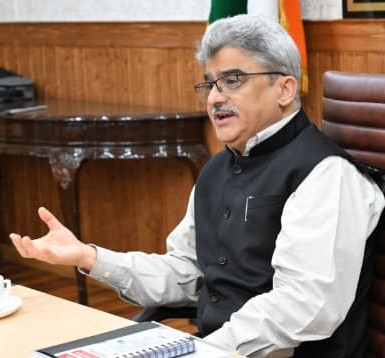
Reviews J&K’s anti-narcotics strategy
Srinagar, Aug 05: Chief Secretary, Atal Dulloo on Wednesday chaired the 18th Union Territory-level meeting of the Narcotics Coordination (NCORD) Committee and undertook a comprehensive review of the strategy to combat drug trafficking and substance abuse through stringent enforcement of the NDPS Act, effective prosecution of offenders, disruption of organised narcotics networks, regulation of pharmaceutical drugs and expansion of treatment and rehabilitation facilities across the Union Territory.
The meeting was attended by the Director General of Police, Director General, Prosecution, Principal Secretary, Home, ADGP, CID; Administrative Secretaries, Divisional Commissioner, Jammu/Kashmir, IGP, Jammu/Kashmir; DIGs of Police; Representatives from the Army, Central Armed Police Forces, Narcotics Control Bureau (NCB) and other senior civil and police officers. Deputy Commissioners and Senior Superintendents of Police of all districts participated through video conferencing.
The Chief Secretary reviewed the implementation of decisions taken during the previous NCORD meeting and assessed the progress achieved by stakeholder departments in the areas of enforcement, prosecution, preventive detention, financial investigation, demand reduction, rehabilitation, regulatory oversight and institutional capacity building.
The meeting also reviewed the proposed Vision Document on Narcotics Control (2026-2029) and the roadmap prepared under the Prime Minister’s 100-Week “Nasha Mukt Yuva for Viksit Bharat Sankalp” campaign, envisaging technology-driven enforcement, strengthened financial investigations, enhanced prosecution, disruption of organised narcotics syndicates, expansion of rehabilitation services and greater inter-agency coordination.
Observing that the 100-day Nasha Mukt J&K Abhiyaan, spearheaded by Lieutenant Governor Manoj Sinha, had evolved into a mass movement against drug abuse, the Chief Secretary remarked that the campaign had made a visible impact across the Union Territory through unprecedented public participation. Referring to his extensive visits across Jammu and Kashmir, he said the campaign had successfully reached every nook and corner of the UT and had significantly strengthened public awareness and community participation in the fight against substance abuse.
Reviewing implementation of the Prime Minister’s 100-Week “Nasha Mukt Yuva for Viksit Bharat Sankalp” campaign, the Chief Secretary directed all Deputy Commissioners to implement the programme in its true spirit in accordance with the prescribed guidelines. He further directed the Information Department to regularly monitor and document the outcomes of the campaign through its NMBA Portal.
Emphasising speedy disposal of NDPS cases, the Chief Secretary directed that the facility of video conferencing for recording evidence of witnesses be operationalised across all NDPS and Sessions Courts. He observed that virtual examination of witnesses would not only expedite trial proceedings but also save them from unnecessary travel and inconvenience.
Reviewing prosecution, he asked the Director General, Prosecution to undertake a comprehensive examination of all NDPS cases recommended for closure without filing appeals so as to ensure that every legally sustainable case is pursued effectively.
The Chief Secretary also directed the Law Department to broaden the scope of investigations by examining the applicability of laws such as the GST Act, MSME Act, Shops and Establishments Act and Tourism Trade Act against drug traffickers, besides closely scrutinising bank accounts and financial transactions to expose and dismantle illicit money trails.
Reviewing rehabilitation measures, the Chief Secretary directed the Health Department to ensure strict implementation of the prescribed Standard Operating Procedures for treatment of persons affected by substance abuse.
He stressed that complying with these SOPs specific set of medicines required for de-addiction treatment should be available at every health institution, from Primary Health Centres to Government Medical Colleges.
He also reviewed the functioning of IPD facilities established in the new Government Medical Colleges and District Hospitals, assessing patient admissions, manpower availability and service delivery. He further called for trained counsellors to be made available in schools, Primary Health Centres and through Self Help Groups to strengthen community-level interventions.
The Chief Secretary directed that the proposed Rehabilitation Policy be implemented on a pilot basis in selected districts of both Jammu and Kashmir divisions before its rollout across the Union Territory. He also called for the development of an integrated online platform for monitoring rehabilitation, facilitating inter-departmental coordination and ensuring effective follow-up of recovering individuals.
Highlighting the importance of continuous capacity building, the Chief Secretary called for regular training programmes for Investigating Officers and Prosecutors through structured six-month training calendars. He also impressed upon the Law Department to examine the feasibility of engaging Special Public Prosecutors for NDPS cases on the pattern adopted by the Narcotics Control Bureau.
He further directed the concerned agencies to identify operational red flags relating to courier services and evolve a robust mechanism to prevent their misuse for transportation and delivery of narcotic substances.
Additionally the expansion of Addiction Treatment Facilities across all districts and the capacity-building initiatives undertaken through IMHANS Kashmir were reviewed too. It was made out that over 4,100 Master Trainers and nearly 4,900 officers and officials have been trained to strengthen the institutional response against substance abuse.
Concluding the meeting, the Chief Secretary called upon all stakeholder departments to maintain the momentum generated through coordinated institutional efforts and continue working in close synergy to effectively curb drug trafficking, strengthen rehabilitation mechanisms and realise the vision of a drug-free Jammu and Kashmir.

