

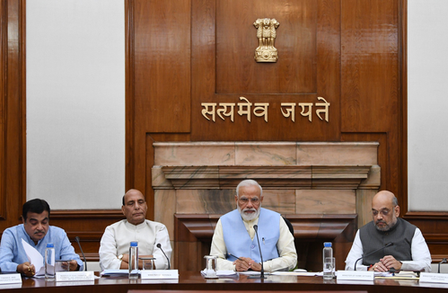
PM, HM hail Bill as boost to ease of living
New Delhi, Apr 3: The Jan Vishwas (Amendment of Provisions) Bill, 2026 has been passed by both Houses of Parliament, aiming to decriminalize minor offences, simplify compliance and improve the ease of doing business and living across sectors, including healthcare.
The legislation amends 784 provisions across 79 Central Acts administered by 23 Ministries. Of these, 717 provisions have been decriminalized, while 67 have been modified to promote ease of living. Overall, the Bill seeks to rationalize over 1,000 offences by removing minor violations and introducing proportionate regulatory measures.
Prime Minister Narendra Modi welcomed the passage of the Jan Vishwas (Amendment of Provisions) Bill, 2026, describing it as a major step towards strengthening a trust-based governance system and enhancing ease of living and ease of doing business in the country.
In a post on X, Modi said the legislation marks “a big boost” to both citizens and businesses by ending outdated regulations, reducing litigation and ensuring faster disposal of cases through decriminalisation of minor offences. He also lauded the consultative approach adopted in drafting the Bill.
Union Home Minister Amit Shah also hailed the passage of the Bill, calling it a “giant step” towards simplifying life and business. In his remarks, Shah said the law trims several legal provisions and advances the vision of a “New India” by making compliance easier.
In the health sector, the amendments cover key laws such as the Drugs and Cosmetics Act, 1940; Pharmacy Act, 1948; Food Safety and Standards Act, 2006; Clinical Establishments (Registration and Regulation) Act, 2010; and the National Commission for Allied and Healthcare Professions Act, 2021.
A key feature of the reforms is the replacement of criminal penalties, including imprisonment for minor procedural violations, with graded monetary penalties. The move is aimed at creating a facilitative regulatory framework while retaining strict provisions for serious offences affecting public health and safety.
Under the Drugs and Cosmetics Act, 1940, imprisonment for certain violations has been replaced with financial penalties, alongside the introduction of an adjudication mechanism. Minor violations—particularly in the cosmetics sector—will now be handled through civil penalties instead of court proceedings.
The law also provides for the appointment of adjudicating authorities, issuance of show-cause notices, personal hearings and an appellate mechanism.
Officials said this would reduce litigation, ease the burden on courts and ensure faster resolution of compliance issues, especially procedural lapses such as non-maintenance of records.
Similarly, amendments to the Pharmacy Act, 1948 increase financial penalties and update accountability provisions. Changes to the Food Safety and Standards Act, 2006 aim to ensure proportionate penalties while maintaining regulatory oversight.
The Clinical Establishments Act, 2010 has been revised to prioritize monetary penalties in cases where deficiencies do not pose immediate risks to patient safety, encouraging corrective action without criminal proceedings. The National Commission for Allied and Healthcare Professions Act, 2021 has also been strengthened to ensure compliance with professional standards.
The government said the reforms reflect a shift towards a trust-based governance model, with standardized adjudication mechanisms and civil penalties ensuring consistency and predictability across sectors.
The measures are expected to reduce compliance burden, minimize litigation and improve regulatory clarity, while safeguarding public health and public interest.

