

Multiple Bills withdrawn, several rejected, 2 taken up
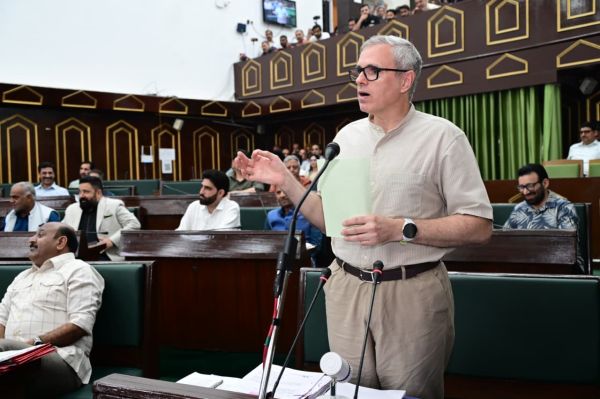
Jammu, April 01: The Jammu and Kashmir Legislative Assembly on Wednesday witnessed extensive legislative activity during the Budget Session 2026, marked by the government’s assurance on phased regularisation of daily wagers, withdrawal of several Private Members’ Bills after assurances, rejection of a few through voice vote, and introduction of two Bills for detailed discussion.
Chief Minister Omar Abdullah reaffirmed the government’s commitment to regularising daily wagers, stating that the process would be initiated in a phased manner during the current financial year. He made the statement while responding to a Private Member’s Bill moved by MLA Muhammad Yousuf Tarigami seeking regularisation of casual and other workers.
The Chief Minister clarified that the government does not oppose the intent behind the legislation but expressed reservations over its timing, noting that a commitment on the issue had already been made recently. He remarked that raising the issue at the very beginning of the financial year appeared unnecessary, adding that not even a month had passed since the government’s announcement.
He reiterated that the government acknowledges the concerns of employees who have spent the prime years of their lives in service and said their regularisation remains a priority. He informed the House that the matter is currently under examination by a committee and urged members to await its report. Following the assurance, Tarigami withdrew his Bill.
Another Bill on the same subject, moved by MLA Waheed ur Rehman Para regarding regularisation of ad hoc, daily wagers and other temporary workers, was rejected through voice vote.
In a series of legislative withdrawals, several members—including Ajaz Ahmad Jan, Ranbir Singh Pathania, Dr. Rameshwar Singh and Arjun Singh Raju—moved Bills on various subjects but withdrew them after receiving assurances from the government. These included amendments to laws related to declaration of assets by public servants, the Jammu and Kashmir Public Services Guarantee Act, 2011, the Civil Services (Decentralization and Recruitment) Act, 2010, and governance and protection of Kashmiri Hindu shrines.
Meanwhile, MLA Abdul Majeed Bhat (Larmi) introduced a Bill proposing prohibition of private practice by government doctors to strengthen public health services. Responding to the Bill, Health and Medical Education Minister Sakeena Itoo stated that private practice is already banned during duty hours and that senior doctors remain on call during night hours, with junior doctors available across health institutions.
On another Bill moved by Pirzada Farooq Ahmad Shah seeking a ban on import of frozen and chilled food items from outside the Union Territory, the Minister said that multiple measures are in place to ensure food quality. She added that the Food Safety Department is actively monitoring imports, with several testing laboratories operational and additional machinery being deployed.
Several other Bills—moved by Mir Saifullah (employment opportunities and unemployment allowance), Mubarik Gul (social security for unemployed technocrats/professionals), and Ranbir Singh Pathania (amendment to Panchayati Raj Act, 1989)—were also withdrawn after government assurances.
The House also continued discussion on a Bill moved earlier by Pawan Kumar Gupta seeking compassionate appointments for next of kin of deceased government employees, security personnel and civilians affected by militancy or enemy action.
Legislators Balwant Singh Mankotia and Dr. Syed Bashir Ahmad Veeri pressed their respective Bills for introduction—relating to ownership rights of evacuee property and amendment to the Jammu and Kashmir Reservation Act, 2004—but both were rejected through voice vote.
In a separate development, the Assembly allowed introduction of two Private Members’ Bills for discussion. One, moved by Tanvir Sadiq, seeks restoration of the Jammu and Kashmir Land Grants Act, 1960, in its original form to safeguard the rights of lessees and ensure public land serves people’s interests. The Chief Minister said the government would not oppose its introduction at this stage and would take a final decision after detailed deliberations.
Another Bill, introduced by Sajad Shaheen, proposes establishment of a university campus at Banihal in Ramban district to promote higher education, research and socio-economic development in the region. Education Minister Sakeena Itoo stated that the government has no objection to its introduction for discussion. Both Bills were subsequently introduced through voice vote.
Responsible tourism focus in J&K
Chief Minister Omar Abdullah Wednesday said that the Tourism Department is taking steps to strengthen training, registration and regulatory mechanisms for tourism stakeholders to ensure safety, quality and responsible tourism practices across Jammu and Kashmir.
The Chief Minister was replying to a question raised by MLA Zadibal Tanvir Sadiq during the Question Hour of the ongoing Budget Session of the J&K Legislative Assembly.
He informed the House that licensing and registration of tourism stakeholders are already regulated under the relevant laws. However, he added that no specific proposal for mandatory rating or certification of all stakeholders is presently under consideration.
Highlighting the importance of service standards, the Chief Minister said that visitor experience, behaviour of service providers and hospitality standards are crucial for the growth and sustainability of a successful tourism economy. He noted that harassment, overcharging or unprofessional conduct can adversely impact the image of a tourist destination.
Responding to a query regarding decline in tourist inflow due to such issues, he said that no such instance has been reported in the Tourism Department where tourist inflow suffered on account of harassment, overcharging or poor behaviour by stakeholders. “However, isolated complaints have been reported and are being addressed as per rules,” he added.
The Chief Minister, who also holds the Tourism portfolio, further informed that regular training and capacity-building programmes are being conducted for stakeholders. These cover areas such as hospitality, etiquettes, housekeeping, guiding, front office operations, food & beverage services, homestays, first aid & CPR, rescue operations, responsible tourism and risk management. He reiterated that there is no separate proposal for mandatory certification of all stakeholders at present.
He also stated that a robust grievance redressal and monitoring mechanism is in place through Tourist Reception Centres, tourism helplines, online grievance portals, email channels and Tourist Police. “Complaints are examined and action is taken as per rules. From January 2025 till date, 508 complaints have been received, of which 413 have been disposed of,” the Chief Minister said.
MLA Gurez Nazir Ahmed Khan raised a supplementary question.

