

States told to curb hoarding, counter misinformation
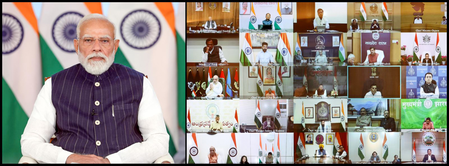
New Delhi: Prime Minister Narendra Modi on Friday chaired a high-level meeting with Chief Ministers and Lieutenant Governors to review preparedness in view of the evolving situation in West Asia and its potential impact on India.
The meeting, held via video conferencing, focused on ensuring economic stability, energy security, and uninterrupted supply chains as global uncertainties continue to rise.
Expressing confidence in a collective response, the Prime Minister said India would overcome the situation by working together as “Team India,” recalling the coordinated Centre-State efforts during the COVID-19 pandemic.
He emphasised that the situation remains dynamic and requires constant monitoring and adaptive strategies. An Inter-Ministerial Group has been operational since March 3, reviewing developments on a daily basis and taking timely decisions, he said.
Highlighting key priorities, Modi stressed maintaining economic and trade stability, safeguarding citizens’ interests, and strengthening industry and supply chains. He underlined the crucial role of states in implementing decisions effectively on the ground.
The Prime Minister urged states to ensure smooth functioning of supply chains and take strict action against hoarding and profiteering. He also called for activation of control rooms at state and district levels to maintain administrative alertness and prevent disruptions.
Special emphasis was laid on advance planning in the agriculture sector, particularly monitoring fertiliser storage and distribution to avoid any disruption during the upcoming Kharif season.
Cautioning against misinformation and rumours, Modi stressed the need for timely dissemination of accurate and credible information to prevent panic. He also advised vigilance against online frauds and fake agents.
He called for special attention in border and coastal states to address challenges related to shipping, essential supplies, and maritime operations, while also urging states to establish helplines and support systems for citizens in West Asia.
The Prime Minister highlighted the importance of sustained engagement with industry and MSMEs to ensure stability in production and employment, and stressed the need for robust coordination mechanisms at all administrative levels for quick response.
He also urged states to accelerate efforts in promoting alternative energy sources, including biofuels, solar energy, electric mobility, and expansion of piped natural gas, along with enhancing domestic oil and gas exploration.
Defence Minister Rajnath Singh said the Centre has been taking proactive steps, including ensuring timely LPG availability and reducing excise duties on petrol and diesel, to cushion the impact of the crisis.
Cabinet Secretary T V Somanathan presented an overview of the current situation and outlined measures for states to handle emerging challenges.
Chief Ministers appreciated the Centre’s response and diplomatic outreach, expressing confidence that the situation remains stable with adequate availability of petrol, diesel, and LPG. They welcomed the reduction in excise duties on fuel and the increase in commercial LPG allocation to 70 per cent of pre-crisis levels.
Reaffirming their commitment to coordinated action, the states said they would continue to work closely with the Centre to effectively manage the evolving situation and safeguard public interest.

