

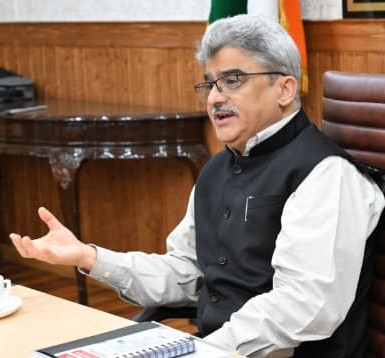
Srinagar, July 28: Chief Secretary, Atal Dulloo on Tuesday chaired a comprehensive review meeting to assess the implementation of the Jammu & Kashmir Competitiveness Improvement of Agriculture and Allied Sectors Project (JKCIP) being implemented by the Agriculture Production Department across the districts of the Union Territory.
The meeting was attended by Additional Chief Secretary (ACS), Agriculture Production Department; VC, SKUAST-Kashmir/SKUAST-Jammu; Secretary (Technical), APD; Mission Director, JKCIP; MD, Horticulture Planning & Marketing; Directors of Agriculture, Horticulture, Sheep Husbandry, Fisheries, Animal Husbandry; Convenor, UTLBC besides senior officers of the Agriculture Production Department.
Emphasising that agriculture continues to be one of the most critical sectors of Jammu & Kashmir’s economy, the Chief Secretary said that JKCIP has been conceived as a transformational initiative aimed at enhancing farmers’ incomes through climate-smart agriculture, promotion of niche crops, value addition, entrepreneurship development, market integration and sustainable livelihood generation.
He observed that the project has created a strong institutional framework for modernising the agriculture and allied sectors and stressed that every implementing agency must now shift its focus from approvals to tangible outcomes on the ground by ensuring timely establishment of beneficiary units and measurable improvement in rural livelihoods.
Regarding enhancing the participation of women and youth as envisaged under the programme, the Chief Secretary directed the Agriculture Production Department to reach out to the women registered under the Self-Help Groups (SHGs) of the Rural Development Department (RDD) and utilise the database of Mission YUVA to effectively engage the aspiring young entrepreneurs across Jammu & Kashmir.
He emphasised that convergence with these flagship initiatives would significantly broaden the programme’s outreach and ensure greater inclusion of eligible beneficiaries.
The Chief Secretary further directed the Deputy Commissioners to institute a roster-based mechanism for regular field inspections by designated officers to assess the quality of implementation, verify the functionality of beneficiary units established under JKCIP, and obtain first-hand feedback from applicants. He instructed that the field visits should also focus on identifying implementation bottlenecks and addressing the challenges faced by beneficiaries in a timely manner to ensure effective execution of the programme.
The Chief Secretary further observed that the implementation of the programme must concentrate on improving the pace of establishment of sanctioned units, strengthening field-level supervision and ensuring that approved beneficiaries are provided all necessary support for timely completion of their enterprises.
Speaking on the occasion, Additional Chief Secretary, Agriculture Production Department, Dr. Ashish Chandra Verma, observed that farmer participation under JKCIP has witnessed remarkable growth since the last review, reflecting the increasing confidence of the farming community in the programme.
While expressing satisfaction over this incremental progress, he maintained that considerable scope still exists for further improvement. He called upon all implementing agencies to intensify awareness campaigns, strengthen grassroots outreach, and ensure that every eligible farmer, youth and aspiring agri-entrepreneur is able to avail the benefits of the project through proactive facilitation and effective last-mile delivery.
While providing the details the MD, JKCIP, Dr. Sagar Doifode Dattatray stated that the number of registered farmers has increased to 60,283, reflecting an increase of nearly 189 per cent over the past. Similarly, he gave out that the number of applications received under various project interventions has risen to 67,579, while 43,168 applications have been approved with 7,501 beneficiary units already been established across Jammu & Kashmir.
A detailed department-wise review revealed substantial progress under Agriculture, Horticulture, Fisheries, Sheep Husbandry, Animal Husbandry, Horticulture Planning & Marketing and SKUASTs. The Agriculture Department as the principal implementing agency has made large-scale interventions in vegetable cultivation, aromatic rice, saffron, protected cultivation, water management systems, medicinal and aromatic plants, honey production, mushroom cultivation and other niche agricultural enterprises.
Similarly, the Horticulture Department has expanded interventions relating to orchard rejuvenation, apple, walnut, kiwi, citrus, mango, guava, litchi, nursery development and water management. Significant progress has also been registered under Fisheries, Sheep Husbandry and other allied sectors through livelihood-oriented interventions aimed at strengthening income generation among rural households.
Reviewing the progress under Farmer Producer Organisation (FPO) development, the meeting was informed that almost the entire project target relating to registration and identification of FPOs has been achieved.
The Chief Secretary also reviewed the Annual Work Plan and Budget (AWPB) for 2026-27 and directed all implementing agencies to ensure timely execution of approved activities, optimum utilisation of available financial resources and strict adherence to implementation schedules. He emphasised that financial progress must be closely aligned with physical achievements to maximise development outcomes and avoid delays in project execution.
During the meeting, the Chief Secretary also reviewed district-wise implementation bottlenecks, scheme-wise progress and project monitoring mechanisms. He directed all implementing agencies to strengthen field verification, maintain complete transparency in beneficiary selection, intensify awareness generation at the grassroots level and regularly review district-wise performance so that implementation gaps are identified and addressed promptly.
The meeting concluded with the Chief Secretary directing all implementing agencies to maintain the present momentum, closely monitor monthly progress against approved targets and ensure that every intervention under the project translates into visible socio-economic benefits for farmers across all districts of the Union Territory.

