

Favours faster dev of housing colonies to meet public needs
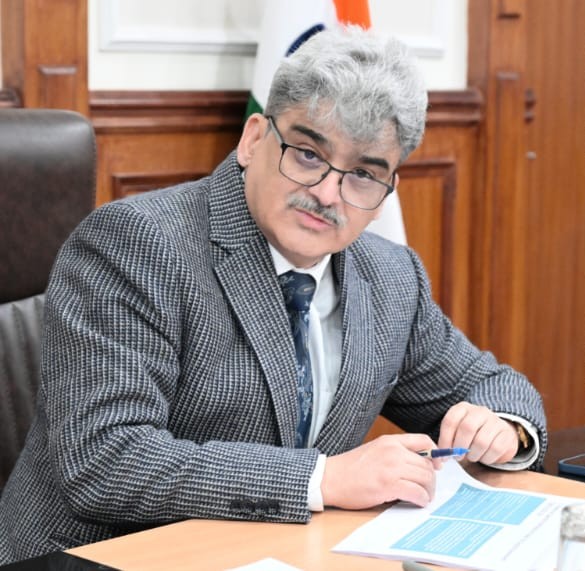
JAMMU: In a significant push towards addressing the growing housing requirements of the people of Jammu & Kashmir, the Chief Secretary chaired a meeting Thursday to assess the progress and future roadmap of housing colonies being developed by the Jammu & Kashmir Housing Board (JKHB), Jammu Development Authority (JDA), and Srinagar Development Authority (SDA).
The review focused on ongoing, proposed, and planned housing projects, with particular emphasis on sustainable development, affordability, and timely execution through innovative models such as Public-Private Partnerships (PPP) and Self-Financing Schemes (SFS) in both Kashmir and Jammu division.
The meeting besides Commissioner Secretary, H&UDD was attended by Vice-Chairmen, JDA/SAD; MD, J&K Housing Board; CEO, CiTAG and other concerned officers.
The Chief Secretary observed that the rapid shrinkage of available urban land coupled with steadily rising land prices has made housing increasingly unaffordable for large sections of the population. He emphasized that the government must proactively intervene through planned housing colonies to ensure that home ownership remains within reach of the common citizen, particularly middle- and lower-income groups.
Highlighting the strategic importance of public housing projects, he noted that structured, high-density housing developed by government agencies not only optimizes land use but also significantly reduces per-unit costs, thereby making housing more accessible to a wider cross-section of society.
The Chief Secretary stressed that affordable housing cannot be achieved through isolated efforts and requires a coordinated, multi-agency approach supported by innovative development models. He underlined that leveraging PPP frameworks, self-financing schemes, and vertical development is essential to counter land scarcity while ensuring quality construction, adequate amenities, and long-term sustainability.
A key highlight of the review was the government’s emphasis on sustainable, net-zero housing colonies, aligned with India’s commitments under COP-26. The adoption of PPP models aims to reduce government exposure while creating model townships that integrate energy efficiency, transit-oriented development (TOD) norms, and climate-resilient infrastructure.
Additionally the CEO, CiTAG (Centre for Innovation and Transformation in Governance) gave out that the centre is actively facilitating PPP-based housing and commercial projects by conducting site visits, preparing DPRs, and finalizing Expressions of Interest (EOIs) to attract national-level developers. Multiple land parcels across Jammu and Kashmir are being bundled and structured to ensure financial viability and inclusive development, including mandated EWS housing, he explained.
The Chief Secretary stressed the need for time-bound execution and quality construction, while ensuring affordability for the common citizen. He underscored that housing remains a key pillar of urban development and social well-being, and directed all agencies to work in coordination to translate these projects into tangible benefits for the people of J&K.

