

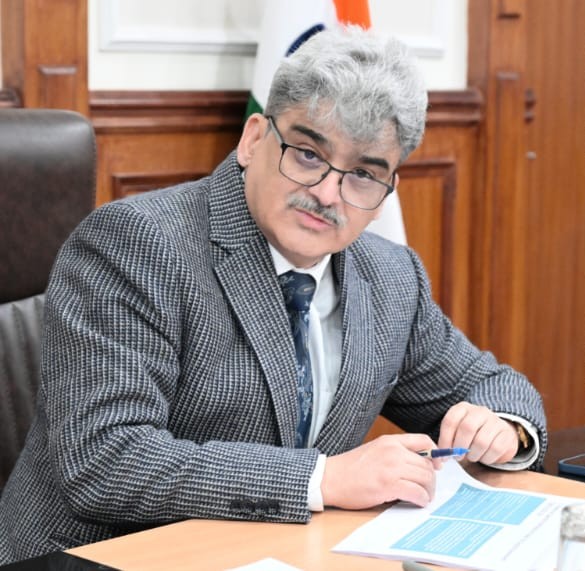
CS chairs two high-level meetings
JAMMU, DECEMBER 30: Chief Secretary, Atal Dulloo, Tuesday chaired two separate high-level meetings to review the initiatives undertaken for promotion of eco-tourism by the Forest Department and the commercial cultivation of Medicinal and Aromatic Plants (MAP) across J&K.
The meeting on eco-tourism was attended by the Commissioner Secretary, Forests; Principal Chief Conservator of Forests (PCCF); Chief Wildlife Warden; Managing Director, Forest Development Corporation; Director, Remote Sensing and other senior officers of the Forest Department.
During the deliberations, the Chief Secretary emphasised the need for a more comprehensive and well-planned approach to eco-tourism development. He advised the department to identify destinations that can offer multiple eco-tourism options, enabling visitors to choose activities based on their interests and the duration of their stay.
The role of the Forest Development Corporation in strengthening eco-tourism infrastructure and services was discussed in detail. The PCCF, Suresh Kumar Gupta, highlighted successful eco-tourism models adopted in other states, including the Ranjit Sagar Lake initiative in Punjab and similar models in Kerala and Tamil Nadu, which were examined for possible replication in J&K.
Commissioner Secretary, Forests, Sheetal Nanda, stated that eco-tourism plan is still at a formative stage, with significant scope for improvement in planning, institutionalisation and execution. She underscored that the initiative aims at sustainable utilisation of the region’s rich natural resources while ensuring conservation of forests and wildlife, community participation, livelihood generation and preservation of local culture.
The presentation by the Managing Director, Forest Development Corporation, outlined a structured roadmap for strengthening eco-tourism across identified destinations. The plan includes identification and selection of suitable eco-tourism sites and land parcels, development of environmentally compliant camping infrastructure, and capacity building through creation of Master Trainers for various eco-tourism activities.
The roadmap also envisages development of quality hospitality services through outsourcing and engagement of professional service providers at each eco-tourism site to ensure high standards of service delivery.
It was informed that the eco-tourism initiative is expected to generate substantial employment and livelihood opportunities, particularly for rural and forest-dependent communities. The initiative also aims at promoting high-quality, high-value eco-tourism and establishing a trusted eco-tourism brand, positioning Jammu and Kashmir as a leading sustainable tourism destination.
During the meeting, the Chief Secretary also rolled out the mobile application ‘e-Bahak’, developed by BISAG-N, for online grant of grazing permissions to nomadic pastoral communities of J&K. The trilingual app (Hindi, English and Urdu) is fully digital with an integrated payment gateway, eliminating manual intervention. It also features weather alerts and guidance systems to facilitate ease of use for nomads.
Later, the Chief Secretary chaired another meeting to discuss strategies for promotion of commercial cultivation of Medicinal and Aromatic Plants across the districts of the UT.
He called for formulation of a clear-vision plan with well-defined objectives, developed in consultation with market stakeholders such as pharmaceutical companies.
The Chief Secretary directed that commercial cultivation should commence with a few popular and locally suitable MAP varieties, with gradual diversification following the development of scientific packages of practices for additional crops. He emphasised active collaboration with research institutions such as SKUAST and CSIR-IIIM, Jammu.
He further stressed the importance of fixing time-bound milestones, developing processing facilities, and ensuring dissemination of advanced knowledge, expertise and infrastructure support from CSIR-IIIM in this sector.

