

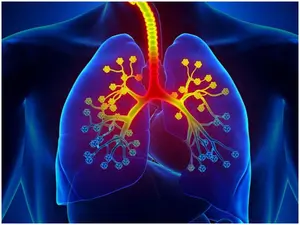
Srinagar, Nov 20: As Kashmir’s temperatures drop, hospitals across the valley begin to witness a sharp spike in admissions of Chronic Obstructive Pulmonary Disease (COPD) and asthma patients.
Doctors said the majority of emergency and casualty cases during winters are linked to COPD—an irreversible and progressive lung condition—largely triggered by smoking and worsening air pollution. They called for prevention, early diagnosis and enhanced respiratory care facilities in the region.
Dr Ghulam Hassan Khan, a chest disease expert said that COPD cases in J&K are increasing at an alarming rate.
“Most of the patients landing in casualty during the winter months are COPD and asthma patients. Smoking remains the leading cause. Quitting smoking is the single most effective step to prevent this lifelong disease,” he said.
The doctor said a considerable number of people who have never smoked also develop COPD due to exposure to poor air quality, which, he points out, is deteriorating in Kashmir.
“Environmental pollution is rising due to combustion emissions, industrial activities, wood and kerosene burning in homes, biomass fuels, and even charcoal used in kangris. At times, Kashmir’s air quality has been reported to be worse than major metro cities,” he added.
According to Dr Khan, reducing smoking rates and improving overall air quality would significantly reduce respiratory disease cases. He urged the administration to take concrete measures for cleaner air.
“Apart from smoking and pollution, genetic factors, socioeconomic conditions, repeated lung infections, exposure to toxic fumes, and vascular complications among IV drug users also contribute to COPD,” he said.
Dr Khan advised lifestyle modifications such as quitting smoking, avoiding allergens and respiratory irritants, staying hydrated, maintaining good nutrition, regular exercise, and avoiding extreme temperatures can slow the progression of COPD.
COPD, once developed, is irreversible, he explained. Winter months bring frequent infections that push patients into hospitals, he added.
“Flu vaccination, pneumococcal and Haemophilus influenzae vaccines every five years are crucial. These vaccines can prevent infections that worsen COPD during winter,” Dr Khan said.
Dr Javid Ahmad, another chest specialist, said that COPD incidence in Kashmir is higher than in other parts of the country. “COPD is a lifelong disease. Winter and pollution aggravate symptoms, leading to increased hospital footfall. Most COPD patients are long-term smokers,” he said.
Dr Ahmad said that early awareness is crucial so that people quit smoking before irreversible lung damage occurs. “Most patients are diagnosed after the age of 45, by which time they’ve often smoked for two decades. The earlier they quit, the better their lungs can cope,” he added.
Doctors advised patients to follow preventive measures to avoid winter complications, which include avoiding overcrowded, poorly ventilated rooms, ensuring adequate ventilation at home, increasing water intake, maintaining a balanced diet and staying away from smoke, dust and pollutants. (KNO)
SKIMS issues advisory on winter-related health conditions
SKIMS on Thursday issued a comprehensive public health advisory on three common winter-related health conditions, urging people to take necessary precautions as part of the World COPD Day observance organised by the Department of Pulmonary Medicine, Division of Internal Medicine.
In a statement issued, SKIMS said that the the event featured a series of expert lectures during a day-long CME-cum-Workshop themed “Shortness of Breath – Think COPD.”
Director SKIMS Prof. M. Ashraf Ganie, Patron & Chief Guest, appreciated the Department of Pulmonary Medicine for its remarkable progress. He expressed satisfaction over the establishment of the newly carved-out Pulmonary ICU and the standardized Paediatric Pulmonary Lab, stressing that SKIMS must now strive to achieve global recognition through its specialised skills and resources.
Highlighting COPD as the second leading cause of death with a particularly high prevalence in Jammu & Kashmir, he called for a comprehensive screening strategy to enable early diagnosis of non-communicable diseases such as COPD. Citing recently published research in JAMA, he noted the high prevalence of lung cancer in J&K, where smoking remains a major risk factor common to both diseases.
“Early diagnosis and prevention are central to reducing the burden of non-communicable diseases,” he emphasized.
Prof. Ashraf further informed that SKIMS will soon receive 100 ventilators and two additional oxygen plants, with procurement already initiated by JKMSCL. He underlined the parallel need for trained manpower, assuring that he is personally exploring all avenues to fill the gap alongside infrastructure expansion.
As part of the event, the Departments of General Medicine, Cardiology, and Neurology jointly issued a Winter Health Advisory, focusing on public awareness and precautionary measures to manage common health conditions during the cold season. Director SKIMS reiterated the institute’s responsibility as a premier healthcare centre to reach out to the community with research-backed guidance and patient-care advisories.
Tariq H. Ganie, Managing Director, JKMSCL and Guest of Honour, praised SKIMS as a “household name in healthcare” and assured full support to strengthen patient-care services. He reaffirmed JKMSCL’s commitment to providing ventilators and other essential support in anticipation of rising winter-related health conditions.
Dean Medical Faculty SKIMS Prof. G. M. Gulzar and Principal SKIMS Medical College Prof. Fazal Q. Parray also spoke on the occasion, commending the Department of Pulmonary Medicine for conducting the important awareness programme.
HOD Internal Medicine Prof. Sunaullah Shah delivered an overview of COPD, noting that over 4 million people globally are affected, with a 12% worldwide prevalence, while J&K witnesses a higher prevalence at 14.5%. He reaffirmed that COPD continues to be the second leading cause of death after cardiovascular diseases, underscoring the urgent need for early diagnosis and preventive strategies.
Former HOD Prof. Rafi A. Jan was felicitated for receiving a prestigious fellowship recognising SKIMS’ outstanding contribution during the COVID-19 pandemic.
The event concluded with a vote of thanks from Dr. Nazia Mehfooz, Organising Secretary.

