

Reviews implementation of RAMP Scheme
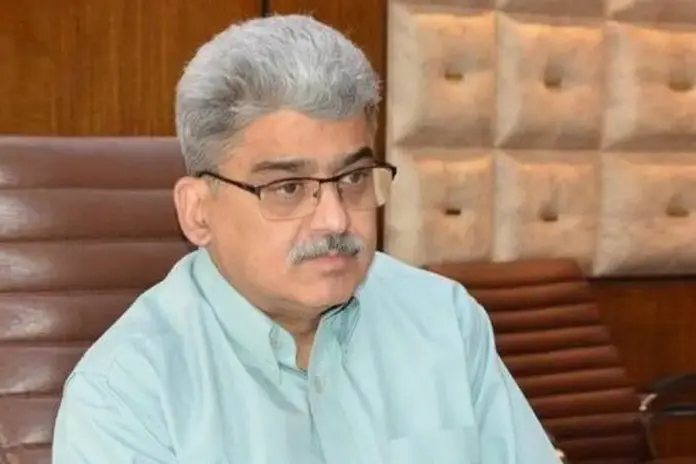
SRINAGAR: Chief Secretary, Atal Dulloo Wednesday convened a meeting of the concerned Administrative Secretaries to review the layers integrated into the PM Gati Shakti (PMGS) portal and explore its potential in facilitating the holistic infrastructure planning and development across J&K.
During the meeting, the Chief Secretary underscored the significance of utilizing the PMGS portal as a unified digital platform for preparation of Detailed Project Reports (DPRs), particularly for infrastructure-related projects such as roads and connectivity. He directed the concerned departments to proactively integrate their planning processes with the PMGS framework for synchronized and data-driven development across the UT.
A key highlight of the meeting was the emphasis on building a digital land bank.
The Chief Secretary called for uploading land parcel data already identified and digitized by the GIS wing of the Forest Department onto the portal. This, he noted, would enable various departments to make optimal use of available land resources for future developmental initiatives.
Recognizing the broader utility of the PMGS portal, the Chief Secretary also directed that it be used to map and analyze key social sector indicators including those related to health, education, power and water supply to enable more targeted interventions. He cited examples such as TB prevalence, anaemia rates, female literacy, school dropout rates and other sector-specific parameters that could benefit from data-backed monitoring and interventions. The portal, he stressed, should evolve as a critical tool in improving the service delivery and achieving developmental outcomes in real terms.
Moreover, Chief Secretary emphasized the need to map disaster-prone zones, including flood, landslide and avalanche-vulnerable areas within the UT using the portal. This would strengthen the disaster preparedness and planning capabilities by enabling evidence-based resource allocation and response planning, he added.
The Department of Industries & Commerce gave a detailed presentation during the meeting, showcasing numerous examples where PMGS portal data had been effectively utilized to aid decision-making and enhance ease of living. They demonstrated cross-sectoral use cases spanning Agriculture, Planning and Industrial Development, highlighting the platform’s potential to foster integrated governance.
Later, the Chief Secretary chaired a review meeting of the Industries & Commerce Department to review implementation of the Raising and Accelerating MSME Performance (RAMP) scheme in the UT.
During the session, Chief Secretary took note of the department’s efforts in formalizing MSMEs, enhancing Udyam portal registrations and undertaking capacity building initiatives for unit holders. He also reviewed the conduct of Buyer-Seller meets, progress on skilling and management programmes and the general outreach to stakeholders under the scheme.
Stressing the importance of a robust decision support system, the Chief Secretary called for immediate API-level integration of critical databases, including those of financial institutions, power utilities, EPFO, GST and the Udyam portal.
Such integrations, he said, are vital for accurate diagnosis and referral of cases to the MSME Health Clinic, which is envisioned to act as a catalyst in the revival and handholding of sick units across J&K.
Dulloo for mission-mode approach
Chief Secretary, Atal Dulloo Wednesday chaired a meeting to review implementation of the Swachh Bharat Mission (Urban) and the status of sewerage treatment infrastructure across urban areas of Jammu and Kashmir.
The meeting, which was attended by Commissioner Secretary, H&UDD; Commissioner, JMC; MD, AMRUT; Director, ULB, Kashmir/Jammu and others, also reviewed progress under the flagship Atal Mission for Rejuvenation and Urban Transformation (AMRUT) 2.0.
While assessing the ongoing initiatives, the Chief Secretary underlined the importance of ensuring scientific disposal of waste and maintaining a high level of urban cleanliness. He observed that hygienic and ambient environments are preferred by the residents and emphasized that sanitation must remain a top priority for all Urban Local Bodies (ULBs).
Calling for a mission-mode approach, Dulloo directed the concerned departments to fast-track all pending projects and complete them in a time-bound manner. He instructed for formulating a robust Operation and Maintenance (O&M) plan for the upkeep and continued usability of old community toilets across urban areas.
The Chief Secretary stressed the importance of adhering to norms prescribed by the National Green Tribunal (NGT) to prevent pollution of water bodies. He called for effective micro-planning of waste management and optimization of the capacity of existing Sewerage Treatment Plants (STPs), aligning with establishment of new facilities with local requirements to ensure comprehensive cleanliness.
Commissioner Secretary, Housing and Urban Development Department (H&UDD), Mandeep Kaur, briefed the meeting about the implementation of Solid Waste Management (SWM) under SBM (Urban) 2.0.
She informed that Material Recovery Facilities (MRFs) are being developed for dry waste, while Compressed Biogas (CBG) and compost plants are being set up for processing wet waste. Besides, legacy waste is being addressed through bioremediation and Construction and Demolition (C&D) waste plants are also coming up in Jammu and Srinagar, she added.
Devansh Yadav, Mission Director, SBM Urban, shared granular details of infrastructure being developed under the mission. He made out that Material Recovery Facilities (MRF) for JMC (150 TPD), SMC (459 TPD), ULBs of Jammu Division (63 TPD), ULBs of Kashmir Division (117 TPD) are currently being created under SBM-U.
Similarly for processing of wet waste, CBG Plants for Jammu city (225 TPD) and Srinagar (300 TPD) are being created along with Compost Units for SMC (459 TPD), Jammu ULBs (100 TPD) and Kashmir ULBs (184 TPD).
With respect to the legacy waste, it was revealed that the same is being treated through a scientific process of bioremediation. It was also informed that the organisation wise legacy waste to be treated involves SMC (11 lakh MT), JMC (7.23 lakh MT), Jammu ULBs (6 lakh MT) and Kashmir ULBs (3.78 lakh MT) for which works had been allotted and at many places started too.
Regarding the status of sewerage treatment infrastructure, Superintending Engineer, UEED, Samiullah Beigh, informed that the current urban population of J&K is approximately 42.5 lakh, generating 457.45 MLD of wastewater. Against this, a cumulative STP capacity of 163.69 MLD has been established. Additionally, 66.9 MLD capacity is under execution and STPs with a further 45.2 MLD capacity have been tendered out.
The meeting was informed that under AMRUT 2.0, projects worth over Rs1002 crore are being implemented across J&K, including Rs 867 crore in Central Assistance. The mission primarily focuses on completion of 99 water supply schemes to ensure sustainable drinking water access to all the major towns of J&K. It also envisages sewerage and septic management projects worth Rs 196 crore in assistance by Central government and Rs20 Cr for Water body rejuvenation projects.
The Chief Secretary emphasized the need to align AMRUT projects with the broader objective of sustainable urban development. He directed all the implementing agencies to maintain momentum and accountability throughout the implementation of this flagship programme.

