

June 6 special day for J&K people: PM
Jammu: Ahead of dedicating Udhampur-Srinagar-Baramulla Rail Link Project (USBRL) to nation, Prime Minister Narendra Modi on Thursday said that June 6, 2025 is going to be a special day for people of Jammu and Kashmir.
The Prime Minister said on X on Thursday on the eve of his June 6 visit that “tomorrow, 6th June is indeed a special day for my sisters and brothers of Jammu and Kashmir”.
“Key infrastructure projects worth Rs 46,000 crore are being inaugurated which will have a very positive impact on people’s lives. In addition to being an extraordinary feat of architecture, the Chenab Rail Bridge will improve connectivity between Jammu and Srinagar. The Anji Bridge stands tall as India’s first cable-stayed rail bridge in a terrain that is challenging.
“The Udhampur-Srinagar-Baramulla Rail Link (USBRL) project ensures all weather connectivity and the Vande Bharat trains from Shri Mata Vaishno Devi Katra to Srinagar will boost spiritual tourism and create livelihood opportunities,” PM Modi said.
The architectural marvel Chenab Rail Bridge, situated at a height of 359 meters above the river, is the world’s highest railway arch bridge. It is a 1,315-metre-long steel arch bridge engineered to withstand seismic and wind conditions.
A key impact of the bridge will be in enhancing connectivity between Jammu and Srinagar. Through Vande Bharat train moving on the bridge, it will take just about 3 hours to travel between Katra and Srinagar, reducing existing travel time by 2-3 hours.
The Anji Bridge is India’s first cable-stayed rail bridge that will serve the nation in a challenging terrain.
Prime Minister will also dedicate Udhampur-Srinagar-Baramulla Rail Link (USBRL) project to the nation. The 272 km long USBRL project, constructed worth around Rs 43,780 crore includes 36 tunnels (spanning 119 km) and 943 bridges.
The project establishes all-weather, seamless rail connectivity between the Kashmir Valley and the rest of the country aiming to transform regional mobility and driving socio-economic integration.
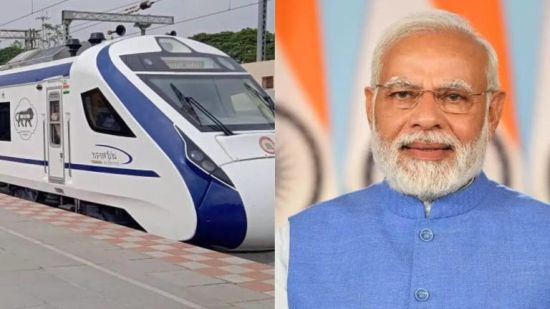
Prime Minister will also flag off two Vande Bharat Express trains from Shri Mata Vaishno Devi Katra to Srinagar and back. They will offer a swift, comfortable, and reliable travel option for residents, tourists, pilgrims among others.
In a major boost to last mile connectivity especially in border areas, Prime Minister will lay the foundation stone and inaugurate various road projects.
He will lay the foundation stone of road widening project from Rafiabad to Kupwara on National Highway-701 and the construction of Shopian bypass road on NH-444 worth over Rs 1,952 crore.
He will also inaugurate two flyover projects at Sangrama Junction on National Highway-1 in Srinagar and at Bemina Junction on National Highway-44. These projects will ease traffic congestion and enhance traffic flow for the commuters.
Prime Minister will also lay the foundation stone of Shri Mata Vaishno Devi Institute of Medical Excellence in Katra worth over Rs 350 crore. It will be the first medical college in Reasi district contributing substantially to the healthcare infrastructure in the region.
Jammu and Kashmir Chief Minister Omar Abdullah visited the Chenab railway Bridge and Anji Khad cable stayed railway Bridge on Thursday.
Omar also posted pictures of the Chenab railway Bridge on X as he wrote: “Visited the tallest railway bridge in the world, The Chenab Bridge, to review arrangements for the visit of the PM Modi tomorrow. Tomorrow is a landmark day for J&K when, finally, the valley will be connected to the rest of the country by a railway link to be inaugurated at the hands of the Honourable PM.”
The Prime Minister will visit the Chenab Railway Bridge at around 11 a.m. on Friday.
The June 6, 2025, is poised to be inscribed in golden letters in the history of Jammu and Kashmir.
The Katra-Srinagar rail section was the most critical component of the ambitious USBRL project, considered a transformative infrastructure initiative aimed at connecting the Kashmir Valley with the rest of the country through a robust, all-weather railway network.
The vision to connect the Kashmir Valley with the rest of the country through a railway line is rooted in the late 19th century during the reign of Maharaja Pratap Singh.
In 1898, he first articulated the vision of a railway line connecting Jammu, the winter capital of the princely state, to Srinagar, the summer capital nestled in the Kashmir Valley. In 1905, he approved the construction of a narrow 762 mm gauge railway via Reasi, which would eventually evolve into the modern USBRL project. By 1905, after years of deliberation, surveys, and consultations with British engineers, Maharaja Pratap Singh approved the construction of a railway line from Jammu to Srinagar. However, the challenging topography, geological instability, and harsh weather conditions of the region delayed significant progress for decades. (With inputs from KNO)

