


Under PM Modi’s leadership, lessons from Kargil have driven significant reforms in military, intelligence, border security, and indigenous manufacturing, ensuring a more resilient and self reliant India.
In the summer of 1999, several high-altitude regions of Ladakh, including Mushkoh Valley, Dras, Kargil, Batalik, Chorbat La, and Turtuk, became the epicentres of a fierce battle between India and Pakistan. What began as a surprising discovery of armed intruders on the Indian side of the Line of Control (LOC) swiftly escalated into a full-blown military standoff. Initially mistaken for insurgents, these infiltrators were soon identified as regular soldiers of the Pakistan Army in disguise. The ensuing hostilities, fraught with the threat of nuclear escalation, lasted for eleven tense weeks. The limited war-like standoff finally drew to a close on July 26, 1999, when India thwarted the intruders and won the war. Now, 25 years later, as India marks the anniversary of its resolute campaign to defend its motherland, the nation pays tribute to the 527 martyrs and over 1,100 wounded. However, this anniversary also serves as a catalyst for a new national security paradigm, shaped by the lessons learned on the battlefield.
Even before the dust had settled on the graves of Pakistani soldiers in the highest reaches of the Himalayas—soldiers whom the Pakistan Army and their Islamic Republic refused to acknowledge —New Delhi, under the leadership of Prime Minister Atal Bihari Vajpayee, planned a thorough investigation into the events leading up to and during the standoff. Within three days of the victory in Ladakh, the Indian government began “to examine the sequence of events and make recommendations for the future” by formally setting up the Kargil Review Committee (KRC). The committee, chaired by K. Subrahmanyam and including Lt. Gen. K.K. Hazari, B.G. Verghese, Satish Chandra, and National Security Advisor Brajesh Mishra, formally submitted is report on December 15, 1999, merely 5 months after a hard earned victory. Based on over a hundred interviews with senior military personnel, diplomats, intelligence officers, journalists, and politicians, the report offered recommendations on border management, civil–military liaison, counter-terrorist operations, defense budget and modernisation, LOC policy, nuclear policy, intelligence, media relations, the National Security Council, national security management, and technology.
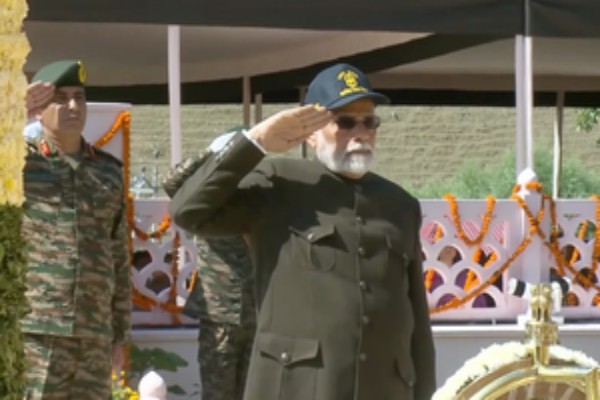
This year, in a speech delivered in Dras, Ladakh, during the 25th Kargil Vijay Diwas, Prime Minister Narendra Modi highlighted the strategic importance of the Agnipath scheme, drawing from the lessons of the 1999 battles in Ladakh. The initiative aims to revitalise the army by reducing the
average age of its personnel through a four-year enlistment of young recruits, thus infusing the force with fresh energy and technical skills. An approach recommended in the KRC, which advocated for maintaining a youthful and fit army. Yet, this marks only the beginning of a broader wave of strategic, technical, and policy shifts inspired by the KRC’s findings and recommendations, with some measures already in place and others still underway.
As part of the KRC’s robust recommendations for reform and modernisation, the Indian military embarked on extensive structural changes. This led to the appointment of the first Chief of Defence Staff (CDS), a position filled by General Bipin Rawat on December 24, 2019, under the PM Modi led NDA government after two decades of deliberation. Aligned with the KRC recommendations, the Indian military underwent extensive modernisation and structural reforms. This included the creation of several tri-services organizations to enhance coordination and efficiency. Notably, the Integrated Defence Staff, Andaman and Nicobar Command, Nuclear Command Authority, Strategic Forces Command, and the Department of Ex-servicemen Welfare were established. Additionally, the Defence Technology Council and the Defence Acquisition Council were created to streamline technological advancements and procurement processes, reflecting the KRC’s emphasis on comprehensive technical reforms.
Additionally, the Kargil Review Committee’s recommendations led to significant upgrades in border infrastructure and intelligence, addressing key issues revealed during the 1998-1999 Pakistani infiltration. Under National Security Advisor Ajit Doval, the establishment of the Multi-Agency Centre (MAC) and the Joint Task Force on Intelligence (JTFI) enhanced coordination. New airstrips and advanced landing grounds were developed to counter potential threats from China and Pakistan, significantly improving border security and readiness. Enhancing military preparedness has been another critical area significantly improved by the KRC’s findings and recommendations. Under the leadership of PM Modi and the NDA government, the adoption of advanced technologies, such as Chinook helicopters and upgraded airstrips, has notably boosted rapid force deployment capabilities. These advancements ensure that the Indian military can respond swiftly and effectively to threats. The success of Uri surgical strikes, Balakot Air strikes and decisive responses to People’s liberation Army (PLA) aggression in regions like Galwan and Pangong Tso further highlight India’s heightened state of readiness and strategic agility, demonstrating a robust defense posture that aligns with the KRC’s vision for a more secure and responsive military framework.
In a fast-evolving globalised world, challenges like the ongoing Ukraine conflict and the escalating threat from Communist Party of China (CPC) showcase the need for a robust, indigenous defense supply chain. This necessity was also highlighted in 1999 when the U.S. denied India’s request for
GPS data during the 1999 Ladakh aggression by Pakistan, prompting India to develop its own GPS system, the Indian Regional Navigation Satellite System (IRNSS), an autonomous satellite navigation system that provides accurate position information services to users in India and the surrounding region, covering up to 1,500 kilometres beyond India’s borders. Learning from these lessons, the 2020 “Atmanirbhar Bharat” initiative was launched to reduce reliance on foreign suppliers and foster self-sufficiency in defense production. This ambitious program aims to build a strong domestic defense manufacturing sector, ensuring India can independently meet its military needs. The initiative promotes research and development, encourages public-private partnerships, and incentivises domestic production of critical defense technologies and equipment.
In the contemporary landscape, under PM Modi’s leadership, these measures reflect a broader strategic shift towards a more secure and resilient India, aligning with the foresight provided by the KRC report. The Indian government’s commitment to strengthening the nation’s defense capabilities is evident in various initiatives designed to bolster preparedness and autonomy in the defense sector. Comprehensive reforms, rooted in real-world scenarios like the 1999 war in Ladakh, have transformed India’s defense landscape, ensuring the country is better equipped to face future challenges with enhanced strategic agility and resilience. The dedication to building an indigenous defense industry not only enhances national security but also contributes to economic growth and technological advancement.
As we honor the martyrs of the Kargil War, we remember their unparalleled bravery and sacrifice, which defended our motherland’s sovereignty and paved the way for these pivotal reforms. Their legacy, combined with the KRC’s invaluable insights and recent decisive actions of the Modi-led government, continues to inspire and strengthen India’s resolve. While KRC’s recommendations laid the foundation for modernising the military, the current government’s decisive policies have ensured that India remains vigilant and prepared against any threats. This collective resolve guarantees a secure future for generations to come, ensuring that the Indian nation remains strong, resilient, and self-reliant.
(The author is an international criminal lawyer and director of research at New Delhi based think tank Centre for Integrated and Holistic Studies (CIHS). )

